15 Feb, 2026
Toilet Seat Sanitizer vs Tissue, Soap & DIY Hacks
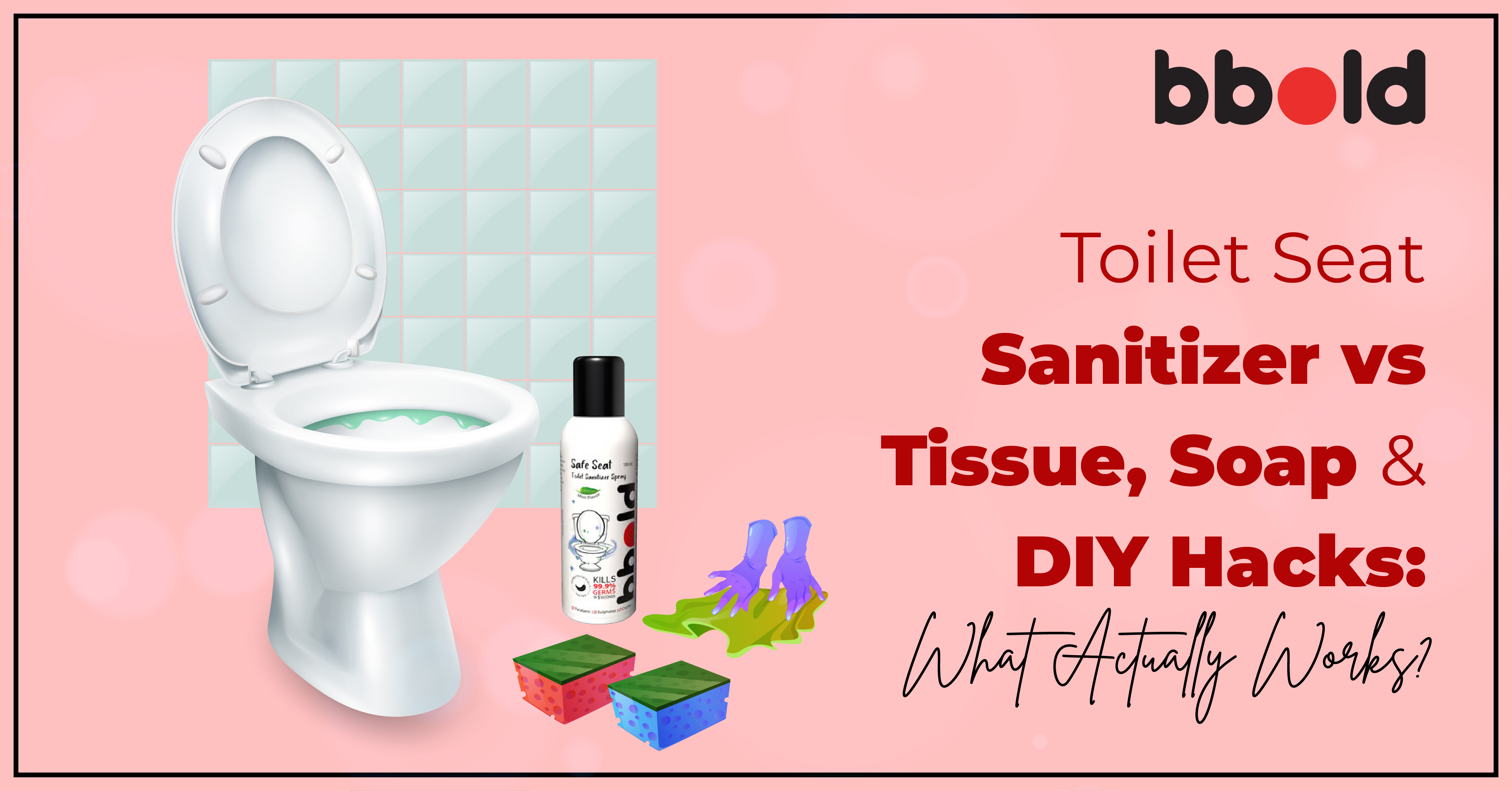
Public toilet hygiene is a common concern, especially for women, travellers, and families on the move. While tissues, soap, and DIY hacks are often used to clean toilet seats, they don't always offer reliable protection. A toilet seat sanitizer spray is designed specifically to sanitise surfaces quickly and conveniently, making it a more effective option for maintaining toilet seat hygiene in public spaces.
Why Toilet Seat Hygiene Matters More Than We Think
Public toilets are used by hundreds of people daily. Even when a seat looks clean, invisible germs can still be present.
In India, public washrooms are commonly found in:
- Malls and cinemas
- Airports, railway stations, and highways
- Offices, cafes, and fuel stations
Maintaining toilet seat hygiene is essential for peace of mind and everyday comfort, especially when travelling or during long outings.
Germs on Toilet Seats - What's the Real Concern?
Toilet seats can carry bacteria transferred through contact, splashes, or improper cleaning between uses.
Why Visual Cleanliness Isn't Enough
- A dry seat may still carry surface germs
- Tissue wiping removes dirt, not microbes
- Water alone doesn't sanitise surfaces
This is why learning how to sanitise a toilet seat properly is important, especially in shared or public toilets.
Common Methods People Use to Clean Toilet Seats
Let's look at what most people rely on-and how effective these methods actually are.
Using Tissue Paper
Tissue paper is often the first instinct.
Limitations:
- Only removes visible moisture or dust
- Does not sanitise the surface
- Can tear easily and spread germs to hands
This makes toilet seat sanitizer vs tissue an important comparison.
Using Soap and Water
Soap is effective for handwashing, but using it on toilet seats in public washrooms is often impractical.
Limitations:
- Requires access to water
- Leaves the seat wet
- Not convenient while travelling
Soap works better for hands than for on-the-go toilet seat cleaning.
DIY Hacks (Paper Towels, Water, Personal Sanitiser)
Many people try quick fixes like:
- Sprinkling water
- Using hand sanitiser on tissue
Limitations:
- Not designed for surface sanitation
- Can damage skin-contact surfaces
- Inconsistent effectiveness
DIY methods offer reassurance but not reliable hygiene.
What Is a Toilet Seat Sanitizer Spray?
A toilet seat sanitizer spray is a portable hygiene product designed to sanitise toilet seats quickly before use.
How It Works
- Sprayed directly on the toilet seat
- Dries quickly without leaving residue
- Suitable for use before sitting
A portable toilet seat sanitizer fits easily into handbags, backpacks, or travel kits.
Toilet Seat Sanitizer vs Tissue, Soap & DIY Hacks
| Method | Sanitises Surface | Portable | Easy to Use |
|---|---|---|---|
| Tissue paper | |||
| Soap & water | |||
| DIY hacks | |||
| Toilet seat sanitizer spray |
This comparison clearly shows why dedicated toilet hygiene products are more reliable.
Why a Toilet Seat Sanitizer Works Better
Designed for Surface Hygiene
Unlike tissues or soap, a toilet seat disinfectant spray is formulated specifically for surfaces that come into direct skin contact.
Quick and Convenient
- No rinsing required
- Dries fast
- Ideal for busy public settings
This makes it practical for daily use.
Travel-Friendly
A best toilet seat sanitizer for travel is compact and spill-safe, making it easy to carry during:
- Office commutes
- Road trips
- Flights and train journeys
How to Sanitise a Toilet Seat Properly (Step-by-Step)
Using a toilet seat sanitizer spray correctly ensures better hygiene.
Simple Usage Guide
- Shake the bottle if required
- Spray evenly on the toilet seat surface
- Allow it to air dry for a few seconds
- Use the seat as usual
This quick routine supports better public toilet hygiene without hassle.
Who Should Always Carry a Toilet Seat Sanitizer?
A portable toilet seat sanitizer is especially useful for:
- Women who frequently use public washrooms
- Travellers and commuters
- Parents with young children
- Office-goers and students
It adds an extra layer of confidence in shared spaces.
FAQs - Toilet Seat Hygiene & Sanitizers
1. Is tissue paper enough for cleaning a toilet seat?
Tissue helps with visible moisture but does not sanitise the surface effectively.
2. Can I use hand sanitiser on toilet seats?
Hand sanitisers are designed for skin, not surfaces, and may not be ideal for toilet seats.
3. Is a toilet seat sanitizer safe to use regularly?
Yes, when used as directed, it is suitable for regular, external surface sanitation.
4. Does a toilet seat sanitizer leave residue?
Most modern sprays dry quickly without leaving sticky residue.
Conclusion - What Actually Works for Toilet Seat Hygiene?
When it comes to toilet seat hygiene, not all methods are equal. Tissues, soap, and DIY hacks may offer temporary reassurance, but they are not always practical or effective in public settings. A toilet seat sanitizer spray is purpose-built to sanitise surfaces quickly, discreetly, and conveniently.
For everyday confidence in public washrooms, adding a portable toilet seat sanitizer to your hygiene routine is a simple yet effective step.
Written by -
Share On